And yet nothing has changed…
I never expected to cross paths with her again after all this time, but when Emma returned to York after seven years away in London, the old streets seemed to pull at something in the air. I later heard how she sat nervously in the taxi, twisting the edge of her sleeve while the familiar roads from our childhood slipped pastthe very ones where we once ran together, laughing and sketching out plans for what lay ahead. Seven years… a full seven years she had stayed away from home.
The driver announced their arrival, the cab easing to a halt outside the old block of flats. She checked her phone, pulled out some pounds to settle the fare, and stepped onto the pavement. The door shut behind her, and for a beat she paused, drawing in the air of her hometown. It was nothing like the bustle of London where she now lived. Here every scent and sound stirred something deep insidefreshly cut grass from the nearby park, a trace of fresh bread from the bakery on the corner, and that unmistakable pull of home. The mix made her chest tighten, a painful sweetness blending gladness with dread for whatever waited ahead.
She had only come for a few days, mainly to see her mother and sort through some documents that had sat untouched too long. She also wanted to wander the old spots, checking if they matched the pictures in her mind. But deep down there was another reason, perhaps the real oneshe desperately wanted to see me. Who knows, maybe things could shift? She knew I lived close by, though she never asked about me outright. Friends would drop my name now and then during chats or online: how I had moved to a solid job, bought a flat, brought my mother to live with me. Each mention made her picture me for a momentwhat I looked like now, what filled my daysbefore she shoved the thoughts aside, scared to let them take root.
The next day she set out for a walk through the town centre. No firm plans, just to take in the city air, see the places under daylight, feel the pulse of the streets that had once been part of her days. She moved slowly, peering into shop windows, giving quick smiles at half-forgotten sightsthe news kiosk where she picked up comics, the bench where she and her friends lingered after school, the cafe where she first tried a cappuccino and nearly spilled it on her new blouse.
Then she spotted me. I was on the far side of the street, head tilted a little as I walked, lost in thought. She stopped dead, everything inside lurching so hard she forgot how to breathe for a second. I looked unchangedstill tall, with that easy, loose stride from our younger days, the same outline and motions, even the same haircut.
Without pausing she darted across the road. The lights flashed yellow, a horn blared somewhere, but she barely registered it. Her feet carried her forward on their own, her heart thudding loud enough to seem audible all along the street.
“Oliver!” she called out when she reached me by the shop.
Her voice waveredshe had not realised how nervous she was. I turned, and there was nothing in my faceno joy, no anger. Nothing at all.
“Emma?” I said, steady and almost blank.
That flat tone landed harder than she had braced for. Everything she had held in for seven years broke loose at once. Tears welled up, her voice shook, and the words kept coming.
“Oliver, I… I’m so sorry,” she got out, words coming slow at first. “I know I have no right to even come near you, but I…” She broke off with a sob, tried to steady herself, but the tears kept falling and she made no move to wipe them. “I love you. I still love you. Forgive me. Please forgive me!”
She rushed on, jumbled and fast, scared that stopping would mean she could not go on. Her head was full of excuses and pleas, but only the core words spilled out the ones she had kept locked away all those years.
She wrapped her arms around me, pressing close against my chest as if the hold could pull back what had slipped away seven years before. In that instant the noisy street, the people, even time itself vanished for herthere was only the warmth of my body and the fierce hope that I might hold her in return.
I did not step back right away. For a split second she thought I waveredmy shoulders eased down, my hands lifted a fraction as if I might pull her in. That tiny shift lit a spark in her: maybe it could still be mended, maybe I had kept those memories too, maybe there was still a chance ahead.
But the moment faded. I gripped her shoulders firmly and eased her back, gentle yet unyielding. My face stayed calm, almost blank, my eyes steady and cool. There was no trace of the lad she had once laughed with until tears came and dreamed beside. Before her stood a grown man whose feelings had long been locked behind a solid barrier.
“Get lost,” I murmured close to her ear.
The words came quiet and empty of feeling, as if she meant nothing to me at all, just a stranger not worth a second glance.
“I hate you,” I added a moment later, and only then did clear contempt show in my look.
I turned and walked off without a backward glance. She stood rooted, stunned. Life carried on around herpeople rushing about their business, cars sounding at the crossing, children laughing farther off. A passer-by gave her an odd look, perhaps wondering why she stood frozen in the middle of the road with that blank stare and pale face. But she saw none of it.
Only the sound of my steps fading away and her own breathing, ragged and helpless. Each second dragged like forever, and the same thought circled: “This is the end. Forever.”
She made her way home slowly, legs heavy and unwilling, every step a struggle, yet she kept going, eyes fixed ahead but seeing nothing. Her mind felt hollowno thoughts, no feelings, just the dull echo of my words beating inside.
When she reached her mother’s flat she offered no explanation. She simply crossed to the room in silence, dropped into a chair and stared out the window. Her mother took one look at the tear-streaked face and dull eyes and said nothing. She only sighed softly, as though she had been expecting this, and went to fill the kettle. The ordinary click of the boil and the scent of tea seemed so everyday against the storm inside, yet that very plainness pulled her back toward the real world a little.
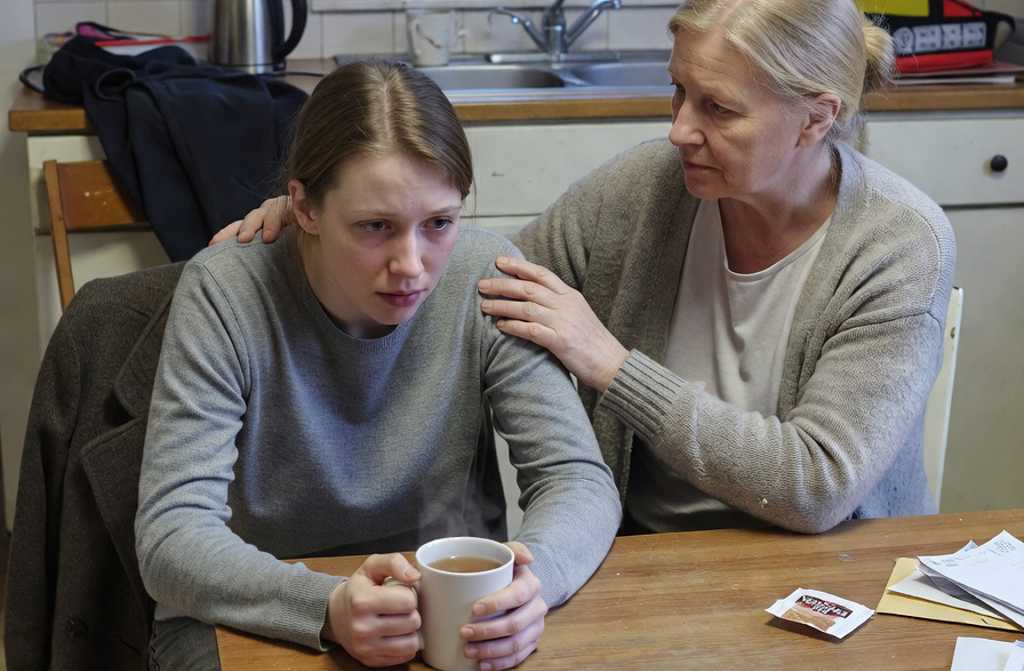
“He didn’t forgive,” Emma whispered, hands tight around the hot cup. The steam brushed her face but she hardly felt it. Her fingers clenched harder, as if grasping at something just out of reach, her eyes fixed on the amber liquid where the lamp light reflected dimly.
Her mother sat close, quiet and without fuss, and patted her shoulder. The gesture was soft and familiar, the same one from childhood when Emma came home with a scraped knee or a row with a friend. It made her feel small and exposed all at once, as if the grown-up choices of the last years had simply dissolved.
“You knew it would turn out this way,” her mother said quietly, no blame in it, only a gentle sadness.
“I knew,” Emma nodded, lifting her eyes from the cup at last. Her voice was level but worn, as if she had turned the sentence over in her head many times, readying for it. “But I hoped. Stupid, isn’t it?”
“Not stupid,” her mother answered softly. “You simply picked this road yourself. You hurt Oliver deeply, and he could not get past our split for a long while… He seemed to turn into Kai from the children’s tale. No one could reach his heart after that.”
Emma drew a long breath, set the cup down and leaned back. Pictures from seven years earlier rose unbidden.
Back then everything had looked straightforward. She was twenty-two, an age when the future glows bright and barriers feel small. I was therekind, steady, the one she could count on no matter what. I was not one for fine speeches or grand words about feelings, but what I did spoke clearer: I showed up when needed, listened well, stood by her even over little things.
Yet there was one snagor what she took for a snag then. I worked on building sites, studied in the evenings, and nursed a dream of starting my own firm. My ideas were solid and mapped out, but they needed timeand she had no wish to wait.
She never chased riches. What she wanted was not flash but a firm footing, a sense that tomorrow was secure. She wanted to know that in a year or two or five she would have steady work, a place of her own, the chance to shape life on her terms. With me it all felt too loose: endless extra shifts, night classes, plans that stayed just plans.
So when her uncle in London offered a spot in his company she said yes at once, barely pausing. It was a real opening, something solid she could not pass up.
There was more she tried not to dwell on. Around the time she settled in London and started the job, Henry came into the picture. He was a well-off businessman, older by a good margin, sure of himself and used to getting what he wanted. They met by chance at a work do where she arrived in a new dress, feeling awkward among the polished crowd. He noticed her straight away, pulled up a chair, struck up talk, asked about her work and hopes.
He was generous with gestures. Flowers arrivednot big bunches but tidy ones with notes saying “To the most beautiful.” Then came invites to restaurants she had only admired from outside, trips to shows and galleries, gifts she had never let herself want: silk scarves, fine pieces of jewellery, delicate heels. Each one came with talk of how she deserved more, how she should not hold back, how important it was to take what life offered.
At first she pushed backblushing, turning things down, explaining she did not need any of it. But Henry kept on gently, saying it was only a mark of regard, that he truly admired her wit and looks. Bit by bit she began to accept. The bright new world drew her in: nights in warm restaurants, rides in smart taxis, the freedom to walk into any shop and take what caught her eye without checking the price. It all felt like a spell she did not want broken.
Somewhere in the middle of those shining times she started seeing Henry properly. Not from any great passion, but because his world promised ease and certainty. With him there was no fretting over rent or the next bill or what the future might cost. He handled it all, wrapping her in a bubble of no worries.
She grew to like that life a great deal. So much that she stopped even thinking of the lad back home who still cared for her. Worse, she began to look down on me, telling herself I would never get anywhere.
Once she came back to York. Not to find me or clear the air or even say hello. She wanted to display her new life, to prove what she was truly worth. A quiet thought sat inside: let him see she had been right, that her choice had worked, that she had escaped the unsure ground we had stood on.
She planned the visit with care. She picked the cafe on the main streetthe one I sometimes stopped at for a coffee after work. She wore a costly dress Henry had given her for her birthday, elegant with a slim belt at the waist. A large ring sparkled on her finger, another gift from him. She carried a bag from a fresh collection she had bought the day before after spotting it in a window.
When I walked in she noticed at once. She was by the window, laughing loudly on purpose at something her companion said, turning so I could not miss her. Our eyes met. In mine she saw confusion, hurt, disbeliefall the things she had tried to ignore in herself for months. Instead of looking away or flushing she held the stare without blinking.
In that second it felt like a win to her. She had shown herself and me that she had picked correctly. Her days now held real chances, comfort and assurance instead of endless talk about what might come. She told herself she felt satisfied, that she had finally claimed what she was owed.
But once I left and she stayed at the table, her laughter faded away. She glanced at the ring, the bag, the man still talking beside her, and a strange hollowness crept in. All of itthe costly items, the fine gestures, the noticesuddenly seemed far off and false. Though she kept smiling and nodding along, something inside whispered: “Was it worth the cost?”
That win proved bitter. Emma saw it only slowly, day by day, as the truth grew sharper. At first Henry kept up the generous, caring frontmeals out, flowers, kind words. But his interest began to thin, like a candle running out of wax.
It showed first in small ways. Warm talk gave way to cool comments. Surprises turned into brief notes: “Pop into that shop and pick something yourself.” Then the jabs started. He began to criticise her looks”Perhaps you should pay more attention to yourself?”her way of speaking”Why laugh so loudly? It sounds common”even the friends she saw now and then”Those old local faces again? Time to find a better crowd, don’t you think?”
He grew scarce. Days, sometimes weeks passed with him gone, leaving her alone in the roomy flat he had taken. She spent evenings by herself, listening to the clock or sorting through clothes with no purpose. When she tried to talk, to say she missed their time together, he brushed it off without meeting her eye:
“You got what you asked for. What more do you want?”
She hunted for reasons. “His work is demanding,” she told herself, “lots of pressure.” Or “He’s worn out, he just needs space.” She kept insisting it was a rough patch that would pass, that she was asking too much. But underneath she knew it was not tiredness or the job. She had become one more pretty plaything to himfresh, eye-catching, fun for a while. Once the shine wore off, so did the interest.
She put up with it. She bore the cutting remarks, the icy silences, the long stretches alone. She bore it because she feared admitting the one big truth: she had been wrong. To own that the bright life was hollow would mean owning something elsethat she had betrayed the only person who had loved her for herself. That I, with my plain work and quiet hopes for a business, was the one who valued her simply as she was, not for any polished surface or fitting someone else’s picture of the perfect partner.
Even the trappings of comfort stopped pleasing her. The dear dresses she once admired in shops now hung limp in the wardrobe. The jewellery that once thrilled her lay in a box like borrowed things. The restaurants she had loved early on, with their soft lights and fine food and festive feel, now just annoyed her to look at. The scent of costly perfume, once a sign of her new world, now turned her stomach a little.
More often she found herself at the window, watching people pass and wondering “What if…” She always cut the thought short, scared to let it run. Because it led to a question she could not answer: “What comes next?”
On those quiet evenings when dusk gathered outside and the flat grew almost too still, she thought more and more that her idea of stability had been empty all along. She pictured a life with sure tomorrows, no money worries, everything laid out neat. But sitting in that roomy, well-kept flat she saw clearly: without someone to share the steadiness with, none of it mattered.
Her mind kept circling back to me. She recalled my hands, strong and a bit callused from work yet warm when they held hers. She recalled my smile, quiet and true rather than loud or put on, the one that came when I was truly content. She recalled how I talked of the future, no grand speeches, just plain plans and a belief that we would manage. That belief had felt so solid that with me she had felt she could face anything.
On the third day she chose to walk in the park where we used to go. The same bench under the wide maplewe had sat there often, chatting about anything, laughing over nothing. She remembered how I once looked at the falling leaves and said, “You know, I want us to have our own place. With big windows so the morning sun comes straight into the room. And always plenty of light and happiness.” At the time she had only smiled, thinking it just talk. Now the words felt like something missed and gone.
She stopped, breathed the cool air, trying to steady her thoughts. Then a familiar voice spoke.
“Emma?”
She turned. Ben stood thereour old friend. He looked surprised but smiled straight away, glad to see her.
“I didn’t think I’d find you here,” he said, brows lifting a touch. “How have you been?”
She paused, hunting for the right tone. She wanted to sound light, but her voice shook a little despite her effort.
“I’m all right,” she managed a smile that was not as forced as she feared. “Just visiting Mum.”
Ben nodded, studying her a moment but not pressing. Instead he gestured to a bench a short way off.
“Fancy sitting? I was out walking and hadn’t decided where next.”
She agreed and they strolled over. Along the way he spoke of his own news and what had shifted in town lately. His voice was easy and friendly, and it helped her relax a bit. She listened, adding a word here and there, while wondering how odd it all feltshe was back in the place where every corner held a memory, and already she had run into someone from those days.
Ben nodded, went quiet for a bit as if weighing his next words, then asked calmly, “Have you seen Oliver?”
She dropped her eyes, gaze moving over the leaves at her feet. She took a momentyesterday’s meeting flashed back, my cold look, the short cutting words. At last she said quietly, “Yes. Yesterday.”
“How did it go?” Ben asked, watching her closely.
“He… he doesn’t want anything to do with me,” she breathed, each word an effort. Her voice stayed level but carried a weight, as if she were holding back a storm inside. “He hates me.”
Ben sighed, took the bench beside her, rested his elbows on his knees and looked out to where the path faded into the soft golden autumn light. He stayed silent a few seconds, then spoke low.
“You know, he took a long time to get back on his feet. You just vanished, Emma. No call, no note. To him it felt like a knife in the back.”
She tightened her fingers, feeling everything inside pull tight. She had known, understood, but hearing it from someone else made it heavier than she had expected.
“I know,” she whispered, eyes still down. “It’s my fault.”
Ben turned his head slightly but did not push or lecture. He simply went on in the same even way.
“He tried to move past you. Saw other people, but none of it stuck. He says he can’t feel that way about anyone else. He was in a bad way, you see? And after you showed up like that… I thought he might shut down for good!”
She nodded without speaking. She could picture me forcing myself to keep going, pushing thoughts of her away, jumping at any voice that sounded close or any stray memory. The idea hurt morenot for my pain, but because she had been the cause of it.
“I didn’t know it would land like this,” she said softly, more to herself than to him. “I thought I was choosing right. I wanted security.”
Ben did not argue or try to change her mind. He simply stayed there, letting her take it in. Wind moved through the park, leaves turning slowly in the air, and children laughed near the fountain somewhere. Life kept moving.
She clenched her fists until her nails bit into her palms. She fought the tears but they still rose, clouding her sight. Inside she felt the bitter truth settle: she could mend nothing, turn no clocks back, undo what she had done.
“I don’t expect him to forgive me,” she said, voice unsteady as she searched for the words. “I only wanted him to knowI regret it. I regret what I did every single day. The thoughts won’t leave me alone. I keep remembering how it was… and how I broke it all.”
Ben watched her without judgment. He took his time, clearly choosing what to say.
“Maybe he doesn’t need to hear it,” he said at last, quiet but sure. “Leave him be, don’t come back, you’re only making it harder. He spent years pulling himself together after you left. And he had started to manage somehow. Your showing up… it stirred it all up again! He rang me yesterday and… he was in a terrible state, drunk. I haven’t seen him like that in years. Don’t wreck what he’s built, Emma.”
She bit her lip hard but stayed quiet. She knew he was right. Her sudden return, the push to see meit had only torn open the old hurts she had tried to close. She had wanted to make amends, but perhaps she had only added fresh pain.
That evening she sat by the window in her mother’s flat. Outside the lights of town came on one by oneyellow, orange, whiteblending into a strange pattern that shimmered like a celebration. But she had no eye for the evening beauty. Thoughts kept turning, one after another, like scenes from a film she could not pause.
She pictured how it might have gone if she had stayed. How we would have taken our first flat together, how I would have started my own work, how we would have mapped the years ahead, laughed at small mishaps, cheered small wins. She thought of all the good moments missed, the kind words unsaid, the touches not shared. But the past stays fixedthis she saw more clearly than ever.
The next day she left. She packed without rush, as if stretching out the goodbye. Her mother stood in the doorway watching, quiet sadness in her eyesnot anger, just sorrow at another parting.
“Look after yourself,” her mother said as Emma stood in the hall with her case.
Emma nodded, kissed her cheek, paused to breathe in the scent of home, then stepped outside.
At the station she bought a ticket to Londonshe needed time to think. A couple of days on the train among strangers might help her see a way forward.
The train pulled away smoothly, rocking gently on the tracks. She kept her eyes on the window. Outside the familiar shapes of town slid by: the old blocks with flower-filled balconies, the playground where she had walked with friends, the little bakery with its bright sign. People moved about their dayssomeone with shopping, someone with an umbrella up despite clear skies, someone hurrying for a bus. It all looked so usual, so ordinary, yet now felt endlessly far.
Somewhere among those streets and houses was the person she had loved more than anyone. The one whose eyes brightened when he spoke of what might come, whose hands could handle hard labour yet hold hers softly. The one she had never found time to explain her leaving to, never given a proper farewell. And now he was lost to her for goodthis she understood, no matter how she tried to tell herself it might not be over.
Half a year went by. She kept on in London, heading to work, meeting friends for coffee at weekends, answering the usual questions about how she was and what she planned. On the surface nothing looked differentthe same routine, the same spots, the same talks. But something inside had shifted for good. She no longer dodged the past or tried to bury it under new faces, costly buys or a packed diary. Now she faced it straight, without fear: she owned the mistake, the hurt she had caused, and her real regret.
She learned to wake with the thought that life keeps moving. She learned to tell herself, “I did what I did. It was wrong, but it cannot be undone.” And in that owning there was a quiet kind of easenot happiness, but at least room to breathe steadier and look ahead without panic.
One evening as she fixed dinner her phone gave a soft buzz for a new message. She wiped her hands, picked it up and saw a number she did not know. Just one line on the screen: “I don’t hate you. But I can’t forgive you.”
She stood still. Her fingers closed tight on the phone, her heart seeming to pause then race. She sank slowly to the floor, pressing the phone to her chest as if she could feel another heartbeat through itthe one belonging to the person who had sent those words.
She did not know what it meant. She could not read whether it was a move closer or a final goodbye. But for the first time in ages it felt as if some thread still ran between us. Thin, easy to snap with one wrong step, yet still there. Someone in another city was thinking of her. Someone had chosen to write despite the hurt and anger. Someone had not shut the door all the way.
She smiled through the tears, the smile small and unsure but true. Maybe it was not the end. Maybe one day we could speakcalmly, without blame, without trying to defend one side or the other. Maybe we would find words to help us both step forward, together or apart, but with a clearer sense of things.
For now it was enough to know I still thought of her. That somewhere hundreds of miles off lived someone who remembered her not only as a past mistake but as part of his own story.
And thatfor nowwas enough.
As I set this down in my diary, the lesson I take from it all is simple but hard: some choices leave marks that time can soften but never fully remove. Regret can linger, and reaching out may open a crack, yet forgiveness is not something we can demand or rush. The real work is accepting what happened, learning what we can, and refusing to let the past freeze the present. Clinging to what might have been can block what still might be, but slamming every door shut can mean missing any chance at peace. In the end we have to find our own way to live with the roads we took and the ones we left behind.And yet nothing has changed…
I never expected to cross paths with her again after all this time, but when Emma returned to York after seven years away in London, the old streets seemed to pull at something in the air. I later heard how she sat nervously in the taxi, twisting the edge of her sleeve while the familiar roads from our childhood slipped pastthe very ones where we once ran together, laughing and sketching out plans for what lay ahead. Seven years… a full seven years she had stayed away from home.
The driver announced their arrival, the cab easing to a halt outside the old block of flats. She checked her phone, pulled out some pounds to settle the fare, and stepped onto the pavement. The door shut behind her, and for a beat she paused, drawing in the air of her hometown. It was nothing like the bustle of London where she now lived. Here every scent and sound stirred something deep insidefreshly cut grass from the nearby park, a trace of fresh bread from the bakery on the corner, and that unmistakable pull of home. The mix made her chest tighten, a painful sweetness blending gladness with dread for whatever waited ahead.
She had only come for a few days, mainly to see her mother and sort through some documents that had sat untouched too long. She also wanted to wander the old spots, checking if they matched the pictures in her mind. But deep down there was another reason, perhaps the real oneshe desperately wanted to see me. Who knows, maybe things could shift? She knew I lived close by, though she never asked about me outright. Friends would drop my name now and then during chats or online: how I had moved to a solid job, bought a flat, brought my mother to live with me. Each mention made her picture me for a momentwhat I looked like now, what filled my daysbefore she shoved the thoughts aside, scared to let them take root.
The next day she set out for a walk through the town centre. No firm plans, just to take in the city air, see the places under daylight, feel the pulse of the streets that had once been part of her days. She moved slowly, peering into shop windows, giving quick smiles at half-forgotten sightsthe news kiosk where she picked up comics, the bench where she and her friends lingered after school, the cafe where she first tried a cappuccino and nearly spilled it on her new blouse.
Then she spotted me. I was on the far side of the street, head tilted a little as I walked, lost in thought. She stopped dead, everything inside lurching so hard she forgot how to breathe for a second. I looked unchangedstill tall, with that easy, loose stride from our younger days, the same outline and motions, even the same haircut.
Without pausing she darted across the road. The lights flashed yellow, a horn blared somewhere, but she barely registered it. Her feet carried her forward on their own, her heart thudding loud enough to seem audible all along the street.
“Oliver!” she called out when she reached me by the shop.
Her voice waveredshe had not realised how nervous she was. I turned, and there was nothing in my faceno joy, no anger. Nothing at all.
“Emma?” I said, steady and almost blank.
That flat tone landed harder than she had braced for. Everything she had held in for seven years broke loose at once. Tears welled up, her voice shook, and the words kept coming.
“Oliver, I… I’m so sorry,” she got out, words coming slow at first. “I know I have no right to even come near you, but I…” She broke off with a sob, tried to steady herself, but the tears kept falling and she made no move to wipe them. “I love you. I still love you. Forgive me. Please forgive me!”
She rushed on, jumbled and fast, scared that stopping would mean she could not go on. Her head was full of excuses and pleas, but only the core words spilled out the ones she had kept locked away all those years.
She wrapped her arms around me, pressing close against my chest as if the hold could pull back what had slipped away seven years before. In that instant the noisy street, the people, even time itself vanished for herthere was only the warmth of my body and the fierce hope that I might hold her in return.
I did not step back right away. For a split second she thought I waveredmy shoulders eased down, my hands lifted a fraction as if I might pull her in. That tiny shift lit a spark in her: maybe it could still be mended, maybe I had kept those memories too, maybe there was still a chance ahead.
But the moment faded. I gripped her shoulders firmly and eased her back, gentle yet unyielding. My face stayed calm, almost blank, my eyes steady and cool. There was no trace of the lad she had once laughed with until tears came and dreamed beside. Before her stood a grown man whose feelings had long been locked behind a solid barrier.
“Get lost,” I murmured close to her ear.
The words came quiet and empty of feeling, as if she meant nothing to me at all, just a stranger not worth a second glance.
“I hate you,” I added a moment later, and only then did clear contempt show in my look.
I turned and walked off without a backward glance. She stood rooted, stunned. Life carried on around herpeople rushing about their business, cars sounding at the crossing, children laughing farther off. A passer-by gave her an odd look, perhaps wondering why she stood frozen in the middle of the road with that blank stare and pale face. But she saw none of it.
Only the sound of my steps fading away and her own breathing, ragged and helpless. Each second dragged like forever, and the same thought circled: “This is the end. Forever.”
She made her way home slowly, legs heavy and unwilling, every step a struggle, yet she kept going, eyes fixed ahead but seeing nothing. Her mind felt hollowno thoughts, no feelings, just the dull echo of my words beating inside.
When she reached her mother’s flat she offered no explanation. She simply crossed to the room in silence, dropped into a chair and stared out the window. Her mother took one look at the tear-streaked face and dull eyes and said nothing. She only sighed softly, as though she had been expecting this, and went to fill the kettle. The ordinary click of the boil and the scent of tea seemed so everyday against the storm inside, yet that very plainness pulled her back toward the real world a little.
“He didn’t forgive,” Emma whispered, hands tight around the hot cup. The steam brushed her face but she hardly felt it. Her fingers clenched harder, as if grasping at something just out of reach, her eyes fixed on the amber liquid where the lamp light reflected dimly.
Her mother sat close, quiet and without fuss, and patted her shoulder. The gesture was soft and familiar, the same one from childhood when Emma came home with a scraped knee or a row with a friend. It made her feel small and exposed all at once, as if the grown-up choices of the last years had simply dissolved.
“You knew it would turn out this way,” her mother said quietly, no blame in it, only a gentle sadness.
“I knew,” Emma nodded, lifting her eyes from the cup at last. Her voice was level but worn, as if she had turned the sentence over in her head many times, readying for it. “But I hoped. Stupid, isn’t it?”
“Not stupid,” her mother answered softly. “You simply picked this road yourself. You hurt Oliver deeply, and he could not get past our split for a long while… He seemed to turn into Kai from the children’s tale. No one could reach his heart after that.”
Emma drew a long breath, set the cup down and leaned back. Pictures from seven years earlier rose unbidden.
Back then everything had looked straightforward. She was twenty-two, an age when the future glows bright and barriers feel small. I was therekind, steady, the one she could count on no matter what. I was not one for fine speeches or grand words about feelings, but what I did spoke clearer: I showed up when needed, listened well, stood by her even over little things.
Yet there was one snagor what she took for a snag then. I worked on building sites, studied in the evenings, and nursed a dream of starting my own firm. My ideas were solid and mapped out, but they needed timeand she had no wish to wait.
She never chased riches. What she wanted was not flash but a firm footing, a sense that tomorrow was secure. She wanted to know that in a year or two or five she would have steady work, a place of her own, the chance to shape life on her terms. With me it all felt too loose: endless extra shifts, night classes, plans that stayed just plans.
So when her uncle in London offered a spot in his company she said yes at once, barely pausing. It was a real opening, something solid she could not pass up.
There was more she tried not to dwell on. Around the time she settled in London and started the job, Henry came into the picture. He was a well-off businessman, older by a good margin, sure of himself and used to getting what he wanted. They met by chance at a work do where she arrived in a new dress, feeling awkward among the polished crowd. He noticed her straight away, pulled up a chair, struck up talk, asked about her work and hopes.
He was generous with gestures. Flowers arrivednot big bunches but tidy ones with notes saying “To the most beautiful.” Then came invites to restaurants she had only admired from outside, trips to shows and galleries, gifts she had never let herself want: silk scarves, fine pieces of jewellery, delicate heels. Each one came with talk of how she deserved more, how she should not hold back, how important it was to take what life offered.
At first she pushed backblushing, turning things down, explaining she did not need any of it. But Henry kept on gently, saying it was only a mark of regard, that he truly admired her wit and looks. Bit by bit she began to accept. The bright new world drew her in: nights in warm restaurants, rides in smart taxis, the freedom to walk into any shop and take what caught her eye without checking the price. It all felt like a spell she did not want broken.
Somewhere in the middle of those shining times she started seeing Henry properly. Not from any great passion, but because his world promised ease and certainty. With him there was no fretting over rent or the next bill or what the future might cost. He handled it all, wrapping her in a bubble of no worries.
She grew to like that life a great deal. So much that she stopped even thinking of the lad back home who still cared for her. Worse, she began to look down on me, telling herself I would never get anywhere.
Once she came back to York. Not to find me or clear the air or even say hello. She wanted to display her new life, to prove what she was truly worth. A quiet thought sat inside: let him see she had been right, that her choice had worked, that she had escaped the unsure ground we had stood on.
She planned the visit with care. She picked the cafe on the main streetthe one I sometimes stopped at for a coffee after work. She wore a costly dress Henry had given her for her birthday, elegant with a slim belt at the waist. A large ring sparkled on her finger, another gift from him. She carried a bag from a fresh collection she had bought the day before after spotting it in a window.
When I walked in she noticed at once. She was by the window, laughing loudly on purpose at something her companion said, turning so I could not miss her. Our eyes met. In mine she saw confusion, hurt, disbeliefall the things she had tried to ignore in herself for months. Instead of looking away or flushing she held the stare without blinking.
In that second it felt like a win to her. She had shown herself and me that she had picked correctly. Her days now held real chances, comfort and assurance instead of endless talk about what might come. She told herself she felt satisfied, that she had finally claimed what she was owed.
But once I left and she stayed at the table, her laughter faded away. She glanced at the ring, the bag, the man still talking beside her, and a strange hollowness crept in. All of itthe costly items, the fine gestures, the noticesuddenly seemed far off and false. Though she kept smiling and nodding along, something inside whispered: “Was it worth the cost?”
That win proved bitter. Emma saw it only slowly, day by day, as the truth grew sharper. At first Henry kept up the generous, caring frontmeals out, flowers, kind words. But his interest began to thin, like a candle running out of wax.
It showed first in small ways. Warm talk gave way to cool comments. Surprises turned into brief notes: “Pop into that shop and pick something yourself.” Then the jabs started. He began to criticise her looks”Perhaps you should pay more attention to yourself?”her way of speaking”Why laugh so loudly? It sounds common”even the friends she saw now and then”Those old local faces again? Time to find a better crowd, don’t you think?”
He grew scarce. Days, sometimes weeks passed with him gone, leaving her alone in the roomy flat he had taken. She spent evenings by herself, listening to the clock or sorting through clothes with no purpose. When she tried to talk, to say she missed their time together, he brushed it off without meeting her eye:
“You got what you asked for. What more do you want?”
She hunted for reasons. “His work is demanding,” she told herself, “lots of pressure.” Or “He’s worn out, he just needs space.” She kept insisting it was a rough patch that would pass, that she was asking too much. But underneath she knew it was not tiredness or the job. She had become one more pretty plaything to himfresh, eye-catching, fun for a while. Once the shine wore off, so did the interest.
She put up with it. She bore the cutting remarks, the icy silences, the long stretches alone. She bore it because she feared admitting the one big truth: she had been wrong. To own that the bright life was hollow would mean owning something elsethat she had betrayed the only person who had loved her for herself. That I, with my plain work and quiet hopes for a business, was the one who valued her simply as she was, not for any polished surface or fitting someone else’s picture of the perfect partner.
Even the trappings of comfort stopped pleasing her. The dear dresses she once admired in shops now hung limp in the wardrobe. The jewellery that once thrilled her lay in a box like borrowed things. The restaurants she had loved early on, with their soft lights and fine food and festive feel, now just annoyed her to look at. The scent of costly perfume, once a sign of her new world, now turned her stomach a little.
More often she found herself at the window, watching people pass and wondering “What if…” She always cut the thought short, scared to let it run. Because it led to a question she could not answer: “What comes next?”
On those quiet evenings when dusk gathered outside and the flat grew almost too still, she thought more and more that her idea of stability had been empty all along. She pictured a life with sure tomorrows, no money worries, everything laid out neat. But sitting in that roomy, well-kept flat she saw clearly: without someone to share the steadiness with, none of it mattered.
Her mind kept circling back to me. She recalled my hands, strong and a bit callused from work yet warm when they held hers. She recalled my smile, quiet and true rather than loud or put on, the one that came when I was truly content. She recalled how I talked of the future, no grand speeches, just plain plans and a belief that we would manage. That belief had felt so solid that with me she had felt she could face anything.
On the third day she chose to walk in the park where we used to go. The same bench under the wide maplewe had sat there often, chatting about anything, laughing over nothing. She remembered how I once looked at the falling leaves and said, “You know, I want us to have our own place. With big windows so the morning sun comes straight into the room. And always plenty of light and happiness.” At the time she had only smiled, thinking it just talk. Now the words felt like something missed and gone.
She stopped, breathed the cool air, trying to steady her thoughts. Then a familiar voice spoke.
“Emma?”
She turned. Ben stood thereour old friend. He looked surprised but smiled straight away, glad to see her.
“I didn’t think I’d find you here,” he said, brows lifting a touch. “How have you been?”
She paused, hunting for the right tone. She wanted to sound light, but her voice shook a little despite her effort.
“I’m all right,” she managed a smile that was not as forced as she feared. “Just visiting Mum.”
Ben nodded, studying her a moment but not pressing. Instead he gestured to a bench a short way off.
“Fancy sitting? I was out walking and hadn’t decided where next.”
She agreed and they strolled over. Along the way he spoke of his own news and what had shifted in town lately. His voice was easy and friendly, and it helped her relax a bit. She listened, adding a word here and there, while wondering how odd it all feltshe was back in the place where every corner held a memory, and already she had run into someone from those days.
Ben nodded, went quiet for a bit as if weighing his next words, then asked calmly, “Have you seen Oliver?”
She dropped her eyes, gaze moving over the leaves at her feet. She took a momentyesterday’s meeting flashed back, my cold look, the short cutting words. At last she said quietly, “Yes. Yesterday.”
“How did it go?” Ben asked, watching her closely.
“He… he doesn’t want anything to do with me,” she breathed, each word an effort. Her voice stayed level but carried a weight, as if she were holding back a storm inside. “He hates me.”
Ben sighed, took the bench beside her, rested his elbows on his knees and looked out to where the path faded into the soft golden autumn light. He stayed silent a few seconds, then spoke low.
“You know, he took a long time to get back on his feet. You just vanished, Emma. No call, no note. To him it felt like a knife in the back.”
She tightened her fingers, feeling everything inside pull tight. She had known, understood, but hearing it from someone else made it heavier than she had expected.
“I know,” she whispered, eyes still down. “It’s my fault.”
Ben turned his head slightly but did not push or lecture. He simply went on in the same even way.
“He tried to move past you. Saw other people, but none of it stuck. He says he can’t feel that way about anyone else. He was in a bad way, you see? And after you showed up like that… I thought he might shut down for good!”
She nodded without speaking. She could picture me forcing myself to keep going, pushing thoughts of her away, jumping at any voice that sounded close or any stray memory. The idea hurt morenot for my pain, but because she had been the cause of it.
“I didn’t know it would land like this,” she said softly, more to herself than to him. “I thought I was choosing right. I wanted security.”
Ben did not argue or try to change her mind. He simply stayed there, letting her take it in. Wind moved through the park, leaves turning slowly in the air, and children laughed near the fountain somewhere. Life kept moving.
She clenched her fists until her nails bit into her palms. She fought the tears but they still rose, clouding her sight. Inside she felt the bitter truth settle: she could mend nothing, turn no clocks back, undo what she had done.
“I don’t expect him to forgive me,” she said, voice unsteady as she searched for the words. “I only wanted him to knowI regret it. I regret what I did every single day. The thoughts won’t leave me alone. I keep remembering how it was… and how I broke it all.”
Ben watched her without judgment. He took his time, clearly choosing what to say.
“Maybe he doesn’t need to hear it,” he said at last, quiet but sure. “Leave him be, don’t come back, you’re only making it harder. He spent years pulling himself together after you left. And he had started to manage somehow. Your showing up… it stirred it all up again! He rang me yesterday and… he was in a terrible state, drunk. I haven’t seen him like that in years. Don’t wreck what he’s built, Emma.”
She bit her lip hard but stayed quiet. She knew he was right. Her sudden return, the push to see meit had only torn open the old hurts she had tried to close. She had wanted to make amends, but perhaps she had only added fresh pain.
That evening she sat by the window in her mother’s flat. Outside the lights of town came on one by oneyellow, orange, whiteblending into a strange pattern that shimmered like a celebration. But she had no eye for the evening beauty. Thoughts kept turning, one after another, like scenes from a film she could not pause.
She pictured how it might have gone if she had stayed. How we would have taken our first flat together, how I would have started my own work, how we would have mapped the years ahead, laughed at small mishaps, cheered small wins. She thought of all the good moments missed, the kind words unsaid, the touches not shared. But the past stays fixedthis she saw more clearly than ever.
The next day she left. She packed without rush, as if stretching out the goodbye. Her mother stood in the doorway watching, quiet sadness in her eyesnot anger, just sorrow at another parting.
“Look after yourself,” her mother said as Emma stood in the hall with her case.
Emma nodded, kissed her cheek, paused to breathe in the scent of home, then stepped outside.
At the station she bought a ticket to Londonshe needed time to think. A couple of days on the train among strangers might help her see a way forward.
The train pulled away smoothly, rocking gently on the tracks. She kept her eyes on the window. Outside the familiar shapes of town slid by: the old blocks with flower-filled balconies, the playground where she had walked with friends, the little bakery with its bright sign. People moved about their dayssomeone with shopping, someone with an umbrella up despite clear skies, someone hurrying for a bus. It all looked so usual, so ordinary, yet now felt endlessly far.
Somewhere among those streets and houses was the person she had loved more than anyone. The one whose eyes brightened when he spoke of what might come, whose hands could handle hard labour yet hold hers softly. The one she had never found time to explain her leaving to, never given a proper farewell. And now he was lost to her for goodthis she understood, no matter how she tried to tell herself it might not be over.
Half a year went by. She kept on in London, heading to work, meeting friends for coffee at weekends, answering the usual questions about how she was and what she planned. On the surface nothing looked differentthe same routine, the same spots, the same talks. But something inside had shifted for good. She no longer dodged the past or tried to bury it under new faces, costly buys or a packed diary. Now she faced it straight, without fear: she owned the mistake, the hurt she had caused, and her real regret.
She learned to wake with the thought that life keeps moving. She learned to tell herself, “I did what I did. It was wrong, but it cannot be undone.” And in that owning there was a quiet kind of easenot happiness, but at least room to breathe steadier and look ahead without panic.
One evening as she fixed dinner her phone gave a soft buzz for a new message. She wiped her hands, picked it up and saw a number she did not know. Just one line on the screen: “I don’t hate you. But I can’t forgive you.”
She stood still. Her fingers closed tight on the phone, her heart seeming to pause then race. She sank slowly to the floor, pressing the phone to her chest as if she could feel another heartbeat through itthe one belonging to the person who had sent those words.
She did not know what it meant. She could not read whether it was a move closer or a final goodbye. But for the first time in ages it felt as if some thread still ran between us. Thin, easy to snap with one wrong step, yet still there. Someone in another city was thinking of her. Someone had chosen to write despite the hurt and anger. Someone had not shut the door all the way.
She smiled through the tears, the smile small and unsure but true. Maybe it was not the end. Maybe one day we could speakcalmly, without blame, without trying to defend one side or the other. Maybe we would find words to help us both step forward, together or apart, but with a clearer sense of things.
For now it was enough to know I still thought of her. That somewhere hundreds of miles off lived someone who remembered her not only as a past mistake but as part of his own story.
And thatfor nowwas enough.
As I set this down in my diary, the lesson I take from it all is simple but hard: some choices leave marks that time can soften but never fully remove. Regret can linger, and reaching out may open a crack, yet forgiveness is not something we can demand or rush. The real work is accepting what happened, learning what we can, and refusing to let the past freeze the present. Clinging to what might have been can block what still might be, but slamming every door shut can mean missing any chance at peace. In the end we have to find our own way to live with the roads we took and the ones we left behind.
Leave a Reply