Eleanor had always felt like an outsider in the very house where she was raised. Her mother lavished affection on her two older sistersEmily and Charlottewrapping them in warmth and indulgence. The constant comparison gnawed at Eleanor, yet she swallowed her bitterness, striving ever harder to earn even a sliver of her mothers love.
Dont you dare think youll ever own this flat! It will go to your sisters. Youve never been anything but a stray wolf pup to me, her mother shrieked, throwing Eleanor out the door the moment she turned eighteen.
Eleanor tried to protest, to point out the injustice. Emily was only three years older, Charlotte five. Both had completed university on their mothers dime, never forced to fend for themselves. Eleanor, however, had always been the odd one out. No matter how good she behaved, the affection in her family was always surfacelevelif it could even be called affection at all. Only her grandfather ever treated her with genuine kindness. He had taken in his pregnant daughter after her husband vanished without a trace.
Maybe Mum is protecting my sisters, saying I look too much like them, Eleanor whispered to herself, searching for a reason behind her mothers coldness. She had attempted honest conversations, each one ending in shouting matches or melodramatic scenes.
Her grandfather remained her anchor. Her happiest memories belonged to the countryside cottage where they spent summers. Eleanor loved turning soil, milking cows, and baking piesany task that could keep her away from a home where every day brought contempt and rebuke.
Granddad, why does nobody love me? Whats wrong with me? she would ask, tears threatening to spill.
I love you, my dear, he would reply, his voice gentle, never mentioning her mother or sisters.
Young Eleanor clung to that belief, that she was loved in a special way. When she turned ten, her grandfather died, and the familys cruelty deepened. Her sisters mocked her, and her mother always chose their side.
From that day onward, Eleanor received nothing newonly handmedowns from Emily and Charlotte. Their taunts echoed through the kitchen:
Oh, look at that fashionable topgood for wiping the floor, or whatever Eleanor needs!
If their mother bought sweets, the sisters devoured them, tossing Eleanor the empty wrappers:
Here, love, collect the bits!
Their mother heard everything but never scolded them. Thus Eleanor grew up as the unwanted wolf pup, forever pleading for love from those who saw her as nothing more than a source of ridicule. The harder she tried to be perfect, the more she was despised.
When her mother finally kicked her out on her eighteenth birthday, Eleanor found a job as a hospital orderly. Endurance and hard work became her creed, and at last she earned a modest wagepennies, but it was something. In the wards, no one looked at her with malice; that alone felt like progress.
Her supervisor saw potential and offered her a scholarship to train as a surgeon. In that tiny market town, a surgeon was a luxury, and Eleanor had already shown a knack for caring for patients.
Life was relentless. By twentyseven, she had no surviving relatives. Work consumed hershe lived for the lives she saved. Yet the ache of loneliness lingered; she slept alone in a staff dormitory, just as she had once slept in the attic of her parents flat.
Visits to her mother and sisters were always a disappointment. Eleanor kept them to a minimum. While the family gathered on the porch to smoke and gossip, she would slip away to the garden and weep.
One bleak afternoon, her colleague Jack, a fellow orderly, approached her:
Why are you crying, love?
Dont mock me, Eleanor replied, voice trembling.
She had always thought of herself as plaina grey mouse unnoticed. Yet at almost thirty, she had become a petite, striking blonde with clear blue eyes and a neat, upturned nose. The awkwardness of youth had faded; her shoulders stood straighter, and her hair, usually bound in a tight bun, seemed ready to burst free.
Youre actually beautiful, love. Hold your head high. Youre a promising surgeon; your future is bright, Jack said, handing her a chocolate barthe first real conversation theyd ever had. She broke down, spilling everything.
Maybe you should call Edward Whitmore? The gentleman you saved recently. Hes wellconnected, Jack suggested.
Thanks, Jack. Ill try, Eleanor murmured.
And if that fails, I have a flat up the roadno mistreatment there, he joked, then halfseriously added, We could get married.
Eleanor blushed; his tone shifted from teasing to earnest. He saw not a pitiful orphan, but a woman worthy of love.
Alright. Ill keep that option in mind, she said, feeling, for the first time in years, that she was more than a workhorse.
That evening she dialed Edwards number:
This is Eleanor, the surgeon. You gave me your number and said I could call if anything came up she hesitated.
Eleanor! Lovely to hear from you. Lets meet for tea and talk, the voice replied warmly.
The following day, her day off, she went straight to his townhouse. She confessed her hardships and asked if he knew anyone needing a livein caregiver.
I understand, dear. I can arrange a junior surgeon post at a private clinic, and you could stay with me. Without you, I wouldnt have gotten this far, Edward said, his tone softening.
Of course, Edward. Will your family mind? she asked.
My family only appears when Im away. They care about the house, not about me, he replied, a hint of melancholy in his voice.
So they began living together. Two years later, a tender romance blossomed between Eleanor and Jack, often over steaming cups of tea. Edward, however, never approved of Jack and constantly warned Eleanor:
Dont get too attached to him, love. Hes a nice chap but not someone you should rely on.
Eleanor smiled, Its too late, Edward. Were getting married. He even proposed in jest two years ago, and now Im pregnant. She beamed, Youll still be important to me. Ill visit dailyyoure like family.
Edward, pale and frail, managed a weak smile. My dear, tomorrow well go to the solicitor and put a cottage in the countryside in your name. Youve always loved country life. It could be your little retreat or you could sell it if you wish.
He faltered, his eyes darkening. Eleanor protestedit seemed too generous, that he would leave the property to her while his own children had never visited him in years. Yet Edward was adamant.
When the deed arrived, Eleanor discovered it was for the very hamlet where her beloved grandfather had lived. The original cottage had long been demolished, the plot sold, strangers now tended the land. Still, owning a patch of that place revived cherished memories.
I dont deserve this, but thank you, Edward, she said, sincere.
Just one condition: dont tell Jack the house is in your name. And dont ask why, he warned, his voice serious. Eleanor nodded, promising compliance.
Later she learned Edwards health was failinghed suffered a stroke and now battled cancer, refusing surgery. She arranged his funeral and moved in with Jack.
Trouble struck around her seventh month of pregnancy. She and Jack had lived together six months when he suggested she find work before the baby arrived.
I might need to work a bit, Jack said.
Eleanor, already counting on savings, felt a sting when Jacks generosity waned. She had covered most of the wedding expenses herself, and his stinginess gnawed at her.
A week before the wedding, while Jack was out, a stranger entered their flat with her own key.
Hello, Im Lena. Jack and I have been seeing each other for a while. Hes just scared to admit it, so Im here to tell you youre no longer needed, Lena declared, tall, thin, and selfassured.
What? Our wedding is in days! Weve paid for everything! Eleanor gasped, bewildered. She had shouldered the majority of the costs for a modest celebration at a local café.
I know. Jack will marry me. I have contacts at the registry, well sort it quickly, Lena replied, as if the decision were final.
When Jack returned, he muttered, Eleanor, Im sorry Its true. Ill help with the baby, but I cant marry you.
Well do a paternity test, Lena added, laying a hand on Jacks shoulder.
What paternity test?! Youre my only love! Eleanor shouted, lunging at Jack with fists.
Dont be ridiculous, love. Youre almost thirty but behave like a child, Lena scoffed.
Jack stood mute, looking down, offering no defence. It became clear: Lena held the strings, and Jack was merely a passive pawn.
Eleanor packed her belongings. There was no point fighting a man who abandoned her so easily. Lena explained that she and Jack had dated long agoshed been married then, now free. Eleanor was just a temporary placeholder until Lenas dream man returned.
She could have demanded answers, but what good would they do? The house she now owned suddenly seemed useful.
The cottage was modest, lacking running water, but the old stove was solidher grandfather had taught her everything needed for rural living. Firewood was stacked, the shed sturdy, and snow already lay at the doorstep, waiting to be cleared. The woodpiles were fulla rare blessing in such a harsh winter.
Edward had introduced her to the neighbours as the new mistress and wife of his son, sparing her from prying questions. She called her mother and sisters;, predictably, they suggested she give the baby up and warned, Never get involved with anyone before the wedding. They also gossiped about the unpaid wedding costs.
No one knew about the cottage, and now Eleanor could hide, regroup, and prepare for motherhood.
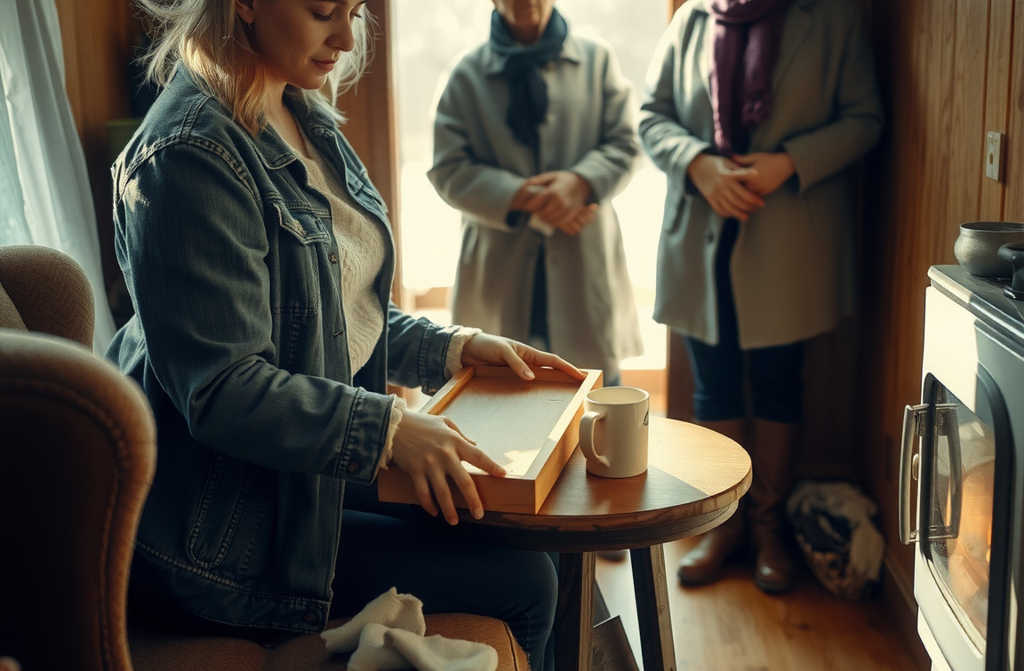
It was bitterly cold; she kept her down jacket on. While stoking the stove, the poker struck something hard. She set aside her gloves and pulled out a wooden box concealed among the firewood. Its lid bore elegant lettering: Eleanor, this is for you. She recognised the handwriting instantlyEdwards.
Inside lay photographs, a letter, and a small tin. Her fingers trembled as she unfolded the envelope.
Dear Eleanor, I am Edward Whitmore, your grandfathers brother. He asked me to look after you after his death, the letter read. It explained a longstanding feud between the brothers; before dying, the elder had instructed Edward to find Eleanor once she turned eighteen and to pass on the inheritance his sister would never relinquish.
The letter also revealed a staggering truth: Eleanors mother was not her biological mother. She was the daughter of Eleanors late aunt, whom her mother had envied and resented. A photograph showed a young couple cradling a baby girlEleanors true parentswho had died in an accident that the grandfather survived because he was with the child at the time.
Nestled in the box were fivehundredpound notes left by the grandfather. The cash warmed Eleanors heart, tears streaming down her cheeks. With the cottage, the money, her medical training, and a child on the way, she finally felt safe.
As the fire crackled, it seemed to swallow all the betrayals, fears, and resentments that had haunted her. She would start anewfor her baby and for herself.
She would eventually forgive those who hurt her, but she was done with their cruelty. This cottage would be her sanctuary.
Edward had often said a good home should belong to someone who cherishes it. Hed built it with his own hands in his youth, using the finest timber. Not just a house, but a legacy! It will stand for generations, he would say. The village was a short bus ride awaytwo stops from the nearest town.
The salary was modest and help with the baby uncertain, but she now had a roof, savings, a profession, and a child on the way. For the first time, Eleanor felt genuinely happy.
Leave a Reply