“If you step over that threshold now, there is no way back. I will block every card,” Andrew’s voice is cold, as if he is scolding a careless employee, not the woman he has shared a bed and joys with for the last fifteen years.
Charlotte freezes in the spacious hallway. Her fingers clench the plastic handle of the travel suitcase until they turn white.
Through the panoramic windows of their elite London apartment, cold November rages, hurling wet snow against the thick glass. Inside, in the perfect designer interior, the air smells of her husband’s expensive cologne and someone else’s lies.
“You can block the cards right now,” she replies quietly but absolutely firmly, looking into his indifferent, steel eyes. “I don’t need anything from you.”
“Oh, come on, Charlie!” Andrew laughs nervously, adjusting the silver cufflinks on his perfectly pressed shirt. “Where will you go? Who needs you at forty-three with no modern work experience? You’re used to spas, personal cleaners, and holidays in the Maldives. Alice is just a fling, a status symbol—understand that at last. All serious people live like this! Calm down, unpack, and tomorrow we’ll go pick out a new car for you. Let’s forget this silly scene.”
“Alice is not a status symbol, Andrew. She’s a living girl younger than our unborn daughter. She’s a terrible diagnosis of your vanity. And no, not everyone lives like this,” Charlotte turns sharply, throws on her coat, and pushes the heavy front door. “Goodbye.”
The silent lift glides down, carrying her away from the dirty betrayal, from the beautiful golden cage where she has played the role of the perfect, understanding, forgiving wife for years.
Charlotte gets into her old Ford Fiesta—the only major thing registered in her name before the marriage—and turns the key. The wipers scrape snow off the windscreen.
Ahead yawns a frightening unknown, but for the first time in years, she breathes surprisingly easily. The weight of others’ expectations has fallen from her fragile shoulders.
The drive is not far, but because of the blizzard, the journey to Wiltshire takes a long five hours. There, in a tiny village called Blackwood, stands the old timber house of her late great-grandfather Matthew, known across the area as a herbalist and healer. Charlotte has not been there in over ten years.
The house greets her with piercing dampness, the smell of rotting leaves and mice. Fortunately, the electricity works, but the dim bulb under the ceiling only highlights the shabbiness: peeling wallpaper, a crooked bookcase, an old brick range that takes up half the room.
Charlotte sleeps in her coat, covered by two dusty blankets, listening to the wind howl outside. She cries quietly, soundlessly, so as not to scare away that tiny hope for a new life that is just beginning to take root in her soul.
In the morning, reality hits her face with frosty air. She has to chop wood, carry water from the well on the next street, and somehow survive on the modest savings she managed to withdraw from her personal card.
A week later, Charlotte starts working as a shop assistant in the village’s only store. The work is hard. She has to carry boxes of tinned meat, freeze behind the counter, and listen to local gossip.
“Hey, city miss, give me fresh bread, not yesterday’s!” often grumbles plump, rosy-cheeked Aunt Valerie, the local postwoman, suspiciously eyeing Charlotte’s well-kept but now cracked hands.
Charlotte just smiles politely. She does not complain. Every split log, every loaf of bread sold returns a feeling of control over her own life.
She decides to clear out the cluttered attic to find her grandfather’s old felt boots. Digging through piles of yellowed newspapers and broken furniture, she stumbles upon a massive oak chest bound with blackened iron.
The heavy padlock is rusted and gives way after a few hammer blows. Inside, it smells of dried wormwood and old paper. Under a stack of linen shirts, Charlotte finds thick, string-bound exercise books. They are her great-grandfather Matthew’s diaries.
In the evenings, sitting by the hot brick range, she devours his writings. Great-grandfather turns out to be not just a village herbalist. In his youth, he studied pharmacy in London, but after the war, he settled in the countryside.
The diaries describe hundreds of unique recipes: healing ointments based on propolis and pine resin, calming blends, anti-aging extracts from liquorice root and wild rose.
But one entry, dated 1989, makes her heart beat faster. It reads like the beginning of a real detective story.
“People often seek salvation in money, forgetting that true strength is hidden in the earth,” writes her great-grandfather. “When discord struck our family, and my own brother tried to take my house with forged papers, I realised that only nature can be trusted. My main treasure, which will save my kin on the darkest day, I have hidden securely where the old birch weeps by the abandoned well. Let it serve the one of my blood who comes here with a broken heart but pure thoughts.”
Charlotte puts down the diary. The abandoned well is at the far end of their long plot. Next to it indeed grows a huge, sprawling birch with drooping branches.
Barely waiting for morning, she arms herself with a crowbar and a spade. The snow is knee-deep, the ground frozen like stone. She clears the area around the tree’s roots and begins to carefully tap the soil. For about two hours, she fights with the ice and despair, until the crowbar clinks against something metal.
With trembling hands, she pulls out a rusty tin box from under the roots. The lid opens with difficulty. Inside, wrapped in oilcloth, gleam dull gold coins—Victorian gold sovereigns. There are about thirty of them.
Next to them lies a bundle with the most precious, elite recipes of her great-grandfather, written on thick parchment.
Tears roll down Charlotte’s cheeks. Her great-grandfather seems to have reached out a helping hand to her across the decades.
The next day, she drives to the county town. She goes to a numismatic shop, pays all necessary fees, and sells half the coins. The sum is substantial—more than enough not only for a complete renovation of the house but also to realise a bold new dream.
Charlotte quits the shop. She orders professional equipment: sterilizers, extractor hoods, glass containers. She refurbishes the veranda, turning it into a bright laboratory. All spring, she collects herbs according to her grandfather’s maps, infuses oils, and melts wax.
She gives Aunt Valerie a jar of healing balm for her cracked hands. Three days later, the postwoman comes running to her, beaming with delight.
“Charlotte! You’re a witch! A good one! My hands are like a young girl’s! Sell me five more jars—all the women at the post office are asking for it!”
Word of mouth spreads instantly.
By autumn, Charlotte cannot keep up with orders on her own. She hires two local women, registers herself as a sole trader, and launches her own brand of natural healing cosmetics, “The Herbalist’s Secret.”
Quality handmade creams quickly find an audience online. Bloggers praise the miraculous formulas, and eco-stores in London queue up for her products.
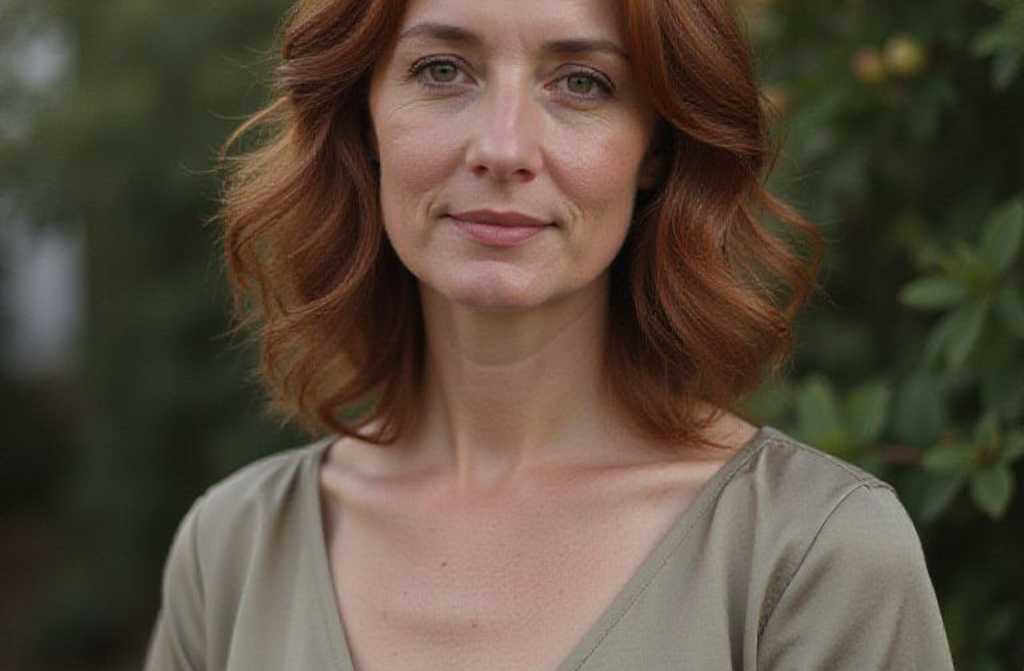
It is a warm, apple-scented August evening. Charlotte sits on the new terrace of her beautiful, renovated house. She wears a simple but elegant dress of wild silk, her hair neatly styled.
She drinks herbal tea and reviews the month’s sales reports. There is no frightened resignation in her eyes anymore, only the calm confidence of a woman in charge of her own destiny.
Suddenly, a taxi stops at the new wooden picket fence.
The gate creaks, and a man limps slowly into the yard. Charlotte squints and cannot believe her eyes. It is Andrew.
But not a trace remains of the former polished, arrogant businessman. He has lost a terrible amount of weight; his expensive suit hangs on him like a coat rack. His hair is thinning and grey, his face an earthy colour. He looks like an old man.
“Hello, Charlie,” his voice trembles as he stops at the steps of the terrace, not daring to come up.
“Hello, Andrew. What brings you here?” she says evenly, without anger or joy. She feels no emotion toward this man anymore.
“I barely found you… I was told you’ve become a big boss, started your own business.”
He sinks heavily onto a wooden bench, breathing hard.
“I lost everything, Charlie,” he begins his rambling, pathetic story. “Alice wasn’t just a stupid doll. She was in cahoots with my financial director. They siphoned company money into fake accounts for years. Then when the tax office started an investigation, they both just vanished. Left me with millions in debt.”
Charlotte listens in silence, watching his thin hands tremble.
“The bank took the flat for the debts,” Andrew continues, wiping sweat from his forehead. “The car too. I was diagnosed with a perforated ulcer from the stress. Spent a month in hospital—nearly kicked the bucket. No one even came to visit… Charlie, I’m a fool. I swapped real gold for cheap glass.”
He looks up at her with red eyes full of tears.
“Forgive me? Please forgive me! You were always wise, kind. I know you have a production now… I could help! I know how to negotiate, I understand logistics. Let’s start over. I’ll work for you, I’ll carry you in my arms!”
Charlotte looks at him, and a strange peace spreads through her soul. The karmic boomerang that always returns to those who sow pain and betrayal has struck Andrew with crushing force. The universe does not forgive cruelty. For every tear she shed in that cold house three years ago, he has paid with total ruin.
“I forgive you, Andrew,” her voice is soft like a summer breeze. “I forgave you a long time ago. Resentment is a poison that poisons the one who drinks it. I prefer to drink clean water.”
Andrew’s face lights up with faint hope; he tries to stand.
“But that does not mean you can come back into my life,” Charlotte cuts him off firmly. “We are not starting over. You betrayed not just me—you betrayed our family. And someone who betrays once for their own gain will do it again. My home, my business, the people who work with me—they are my new family. And I will not let you drag us down into your problems.”
She stands, goes inside, and returns a minute later. In her hands, she holds a dark glass jar.
“Take this. It’s a thick sea buckthorn and propolis extract, my grandfather’s recipe. It heals stomach ulcers perfectly. Take half a teaspoon on an empty stomach.”
Andrew takes the jar, bewildered. His lips move soundlessly, as if he wants to say something more, but meeting Charlotte’s unwavering, cold gaze, he only drops his head.
“Goodbye, Andrew,” she says and turns away, making it clear the conversation is over.
He shuffles slowly to the gate, his boots scraping on the gravel. Charlotte stands on the terrace and watches the taxi carry her past away forever.
Life’s difficult trials often seem like the end of the world, an unfair punishment from fate. But sometimes, the betrayal of a loved one becomes the very saving push that wakes us up. It shatters illusions, removes rose-tinted glasses, and opens the door to our true purpose.
You only need to find the strength not to become bitter, to forgive your offenders, and to start building your own happiness with your own hands.
Did Charlotte do the right thing? Or should she have taken Andrew back?